
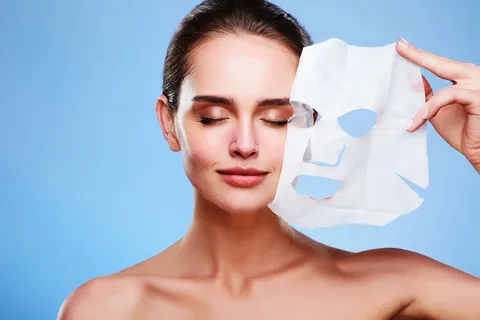
How Do Face Masks Remove Blackheads?
Blackheads are open comedones — pores clogged with excess sebum and dead skin cells that turn dark when exposed to air. Unlike whiteheads, the pore stays open, which lets the plug oxidize. No mask permanently erases blackheads (they are a recurring concern), but the right formula can clear existing ones and slow down new blockages.
Face masks tackle blackheads through three main mechanisms:
- Absorption – Clay and charcoal ingredients act like sponges, soaking up surface oil and pulling sebum from the pore opening.
- Capillary action – As the mask dries, it draws oily debris upward and outward from the pore, lifting impurities before they harden into a blackhead.
- Chemical exfoliation – Beta-hydroxy acids (BHAs like salicylic acid) penetrate deep into the follicle and dissolve the “glue” holding dead cells and oil together.
A well-formulated mask often combines two or all three of these actions. A clay mask with salicylic acid, for instance, absorbs oil on the surface while BHA works inside the pore — a combination backed by clinical research.
If you’re looking for the best face mask to remove blackheads, start with formulas that blend absorbent clays with chemical exfoliants. For a trusted review of top options, check out Pier Augé’s guide on the best face mask to remove blackheads.
Table of Contents
Key Ingredients That Actually Clear Blackheads
Not all masks are created equal. Below are the evidence-backed ingredients that dermatologists and clinical studies consistently recommend for blackhead-prone skin.
Kaolin Clay
The gentlest of the clays, kaolin is ideal for sensitive or dry skin types. It absorbs oil without stripping the skin’s natural moisture barrier. In a 4-week clinical study published in Skin Research and Technology, a mask containing kaolin and bentonite reduced open comedones by 25.38% after the first week, 47.12% after two weeks, and 65.77% after four weeks (PMC10626287). Skin oiliness dropped 68.97% after the first treatment.
Bentonite Clay
Formed from volcanic ash, bentonite carries a strong negative charge that binds to positively charged toxins and excess sebum. It is the most absorbent clay and works best for oily and combination skin. The same clinical trial noted significant improvements in skin hydration (+29.65%) and barrier function (TEWL reduction of 20.41%) alongside the reduction in blackheads.
Activated Charcoal
Charcoal is a highly porous substance that adsorbs (binds) impurities like a magnet. It excels at drawing out chemical residues, pollution, and bacteria from pores. While less studied than clay for blackheads specifically, many effective charcoal mask for blackheads products combine charcoal with other actives for a deeper detox.
Salicylic Acid (BHA)
This oil-soluble beta-hydroxy acid is the gold standard for treating blackheads. Because it dissolves in oil, it penetrates deep into the follicle to break up the plug from within. An 8-week randomized controlled trial in the Journal of Cosmetic Dermatology found that adding a salicylic acid mask blackheads treatment to a serum significantly improved closed comedone reduction (−6.56 vs −5.19, p = 0.022) and overall acne severity (−0.39 vs −0.12, p = 0.026) compared to serum alone, with no adverse reactions (PubMed 36999489). This confirms that a salicylic acid mask blackheads formula is both safe and highly effective.
Sulfur
An old-school acne fighter, sulfur works by drying out the surface of the skin and absorbing excess oil. It also has mild antimicrobial properties that help reduce acne-causing bacteria. It is often found in clay masks for added efficacy.
Lactic Acid (AHA)
While AHAs are water-soluble and work on the skin’s surface, they help by exfoliating the dead cell layer that can trap oil inside pores. Lactic acid is the gentlest AHA and also boosts hydration. It makes a good companion to BHA in a pore cleansing mask designed for blackheads.
| Ingredient | Mechanism | Best For | Clinical Strength |
| Kaolin Clay | Absorbs oil | Sensitive/dry skin | 65.77% blackhead reduction in 4 weeks |
| Bentonite Clay | Deep absorption | Oily/combination skin | 68.97% oil reduction after first use |
| Activated Charcoal | Adsorbs toxins | Pollution-prone skin | Limited direct studies; effective in combination |
| Salicylic Acid (BHA) | Dissolves plugs inside pores | All skin (oily especially) | Significant reduction in comedones vs control |
| Sulfur | Dries and antimicrobial | Oily/inflamed skin | Long history of use; gentle option |
| Lactic Acid (AHA) | Surface exfoliation | Dry/uneven texture | Improves skin turnover and hydration |
Best Types of Face Masks for Blackhead Removal
Knowing which ingredient to look for is only half the battle. The format of the mask also matters.
Clay Masks
The gold standard for blackhead control. Clay mask for blackheads products use kaolin, bentonite, or both to draw oil out of pores. They are ideal as a weekly deep-cleansing treatment. Look for formulas that also include salicylic acid or sulfur for added exfoliation.
Charcoal Masks
Activated charcoal binds to impurities and lifts them away. A good charcoal mask for blackheads often combines charcoal with clay to maximize absorption. These are excellent for people with oily skin who also deal with environmental buildup.
Peel-Off Masks
These form a film that you peel away, entrapping surface debris. While satisfying, dermatologists caution against overuse: the adhesive can stretch pores and cause micro-tears in sensitive skin. They are best reserved for occasional use on the nose area only.
Exfoliating Mask Formulas
These are typically rinse-off masks that combine chemical exfoliants (salicylic, glycolic, or lactic acids) with absorbent clays. They deliver a dual action: the acid dissolves the plug while the clay lifts it away. Many face mask for clogged pores products fall into this category.
Sheet Masks with BHA
A lighter option for maintenance. Sheet masks soaked in BHA or azelaic acid provide hydration plus gentle exfoliation. They aren’t strong enough for established blackheads but work well between deeper treatments.
How to Use a Blackhead Removal Mask the Right Way
Even the best blackhead removal mask will disappoint if used wrong. Follow this routine:
Step 1: Cleanse – Wash your face with a gentle, sulfate-free cleanser. Skip harsh scrubs before masking — they can sensitize the skin.
Step 2: Pre-treat with BHA (optional but recommended) – Apply a 2% salicylic acid toner or serum and wait 20–30 minutes. This softens the plug so the mask can pull out more debris. The clinical trial we referenced earlier used exactly this approach — BHA first, mask second.
Step 3: Apply the mask – Use clean fingertips or a brush to spread an even layer over your T-zone or whole face. Avoid the eye area. Leave on for 10–15 minutes, until the mask is nearly dry but still slightly damp. Letting clay crack and fully dry dehydrates the skin and causes irritation.
Step 4: Rinse with warm water – Gently massage in circles as you rinse to get light physical exfoliation. Pat dry with a soft towel.
Step 5: Hydrate and repair – Apply a hydrating serum or a recovery overnight mask. This step is non-negotiable: deep-cleansing masks disrupt the skin barrier temporarily, and restoring hydration prevents rebound oil production.
Frequency: Use a clay mask for blackheads no more than 1–2 times per week. Over-masking strips the barrier and makes oiliness worse over time.
Common Mistakes to Avoid When Treating Blackheads
Many people sabotage their blackhead-fighting efforts with well-intentioned but damaging habits.
Pore Strips: A Temporary Fix
Pore strips rip off the top layer of dead skin cells along with the blackhead plug. This gives instant gratification but can traumatize the skin, stretch pore openings, and worsen inflammation. They do nothing to address the root cause — oil production and cell turnover.
Over-Masking
Using a clay or charcoal mask more than three times a week leads to a compromised moisture barrier. Dry, irritated skin then overcompensates by producing more oil, creating a vicious cycle. Stick to 1–2 times weekly.
Skipping Hydration After Masking
The same clinical trial that showed a 65.77% reduction in blackheads also demonstrated a 29.65% increase in skin hydration when the mask was followed by moisturizer. Skipping hydration robs your skin of the restorative step needed to maintain barrier integrity.
Using Physical Scrubs on Active Blackheads
Rough scrubs can rupture the walls of already dilated pores, leading to micro-tears and inflammation. Instead, rely on chemical exfoliation with BHAs.
Learn more about why post-treatment recovery is essential in Pier Augé’s deep dive on PDRN overnight mask benefits.
Why Post-Mask Recovery Matters — Repairing Your Skin Barrier
Every deep-cleansing mask — whether clay, charcoal, or acid-based — disrupts the epidermis temporarily. This is normal and even intended: the mask lifts impurities and exfoliates dead cells. But afterward, the skin is vulnerable. Water loss increases, and the barrier’s lipid matrix may be compromised.
This is where post-mask recovery becomes a non-negotiable step. Applying a rich, restorative product after masking not only soothes the skin but also locks in hydration and accelerates barrier repair.
The Role of PDRN in Skin Recovery
Polydeoxyribonucleotide (PDRN) is a biomimetic compound with 98% similarity to human DNA. It has been extensively studied for its ability to activate adenosine receptors, stimulate collagen synthesis, and enhance extracellular matrix remodeling. A review in Pharmaceutics confirmed that PDRN supports ECM regeneration through the PI3K-Akt and TGF-β signaling pathways (PMC12388916). A randomized, double-blind clinical trial in 33 women found that a PDRN-containing cream significantly improved dermal density (+8.67%), reduced wrinkle volume, decreased under-eye bag volume (−18.42%), and enhanced skin brightness (+4.88%) compared to placebo, with Type I collagen secretion increasing by over 1.5 times (SCIRP 146672).
The Perfect Post-Mask Companion: Pier Augé Douce Aura Overnight Mask
After you’ve used your favorite pore cleansing mask to extract blackheads, your skin is primed for intensive repair. The Pier Augé Douce Aura Overnight Sleeping Mask is specifically designed for this stage. Infused with High-Purity PDRN complex, Arctic Cloudberry, and shea butter, it delivers a cream-to-veil texture that transforms from a rich cream into a transparent, pillow-safe finish within minutes.
Clinical testing on 33 women over 14 days showed:
- +52.69% radiance boost in just 15 minutes
- −20.69% wrinkle reduction after two weeks
- +45.86% hydration surge
- +14.82% plumping effect
The PDRN in the formula actively supports collagen synthesis and barrier recovery, making it an ideal follow-up to any deep-cleansing routine. Use it 2–3 times per week as a targeted repair mask, or nightly as a moisturizer.
Frequently Asked Questions
How often should I use a face mask for blackheads?
Use a clay or charcoal mask no more than 1–2 times per week. For salicylic acid masks, you can use them up to twice weekly, but always follow with a hydrating step. Over-masking strips the barrier and triggers rebound oiliness.
Can face masks permanently remove blackheads?
No. Blackheads are a recurring condition caused by ongoing oil production and cell turnover. Masks provide temporary clearing but don’t prevent new ones from forming. Consistent maintenance — including regular masking, chemical exfoliation, and non-comedogenic moisturizing — is required to keep pores clear.
What is the best face mask to remove blackheads for oily skin?
A bentonite clay mask combined with salicylic acid offers the most effective treatment for oily, congestion-prone skin. Look for products that list both ingredients high on the label. The clinical data supports this combination for maximum comedone reduction.
Are peel-off masks bad for blackheads?
Peel-off masks can be used occasionally but are not recommended as a primary treatment. The adhesive action can stretch pores and irritate sensitive skin. If you enjoy the sensation, limit use to once every two weeks on the nose only, and never use them on broken or inflamed skin.
Should I use a clay mask or charcoal mask for blackheads?
Both are effective, but they serve slightly different purposes. Clay masks excel at oil absorption and are better for sebum-heavy blackheads. Charcoal masks are superior for drawing out chemical impurities and pollutants. Many high-quality masks combine both — look for a clay mask for blackheads that also contains charcoal for a well-rounded approach.
Can I use a blackhead mask if I have sensitive skin?
Yes, but choose formulations designed for sensitivity. Kaolin clay is gentler than bentonite. Avoid masks with high concentrations of acids (stick to 2% salicylic acid or less) and skip peel-off formats. Look for soothing ingredients like aloe, bisabolol, or shea butter. Always patch test first.
This article is for informational purposes only and does not constitute medical advice. Consult a board-certified dermatologist for personalized skincare recommendations.
